Masters Opportunities with the Accelerator Group
We have a number of Masters projects available for students commencing in Semester 1 of 2027.
For each project, please contact the listed person for further information.
Developing an irradiation platform for medical applications
Radiation therapy (RT) is used to treat ~40% of all cancer patients.
Conventional RT uses linacs to deliver beams of 6-18 MV X-ray photons to tumour sites. Proton beam therapy (PBT) is an advanced method of RT enabling more precise treatments and reduced side effects. PBT is especially beneficial for paediatric patients and complex tumours located close to critical organs. Brain cancer is the leading cause of death for children with cancer: PBT could improve treatment outcomes but biological mechanisms and clinical advantages still need further study.
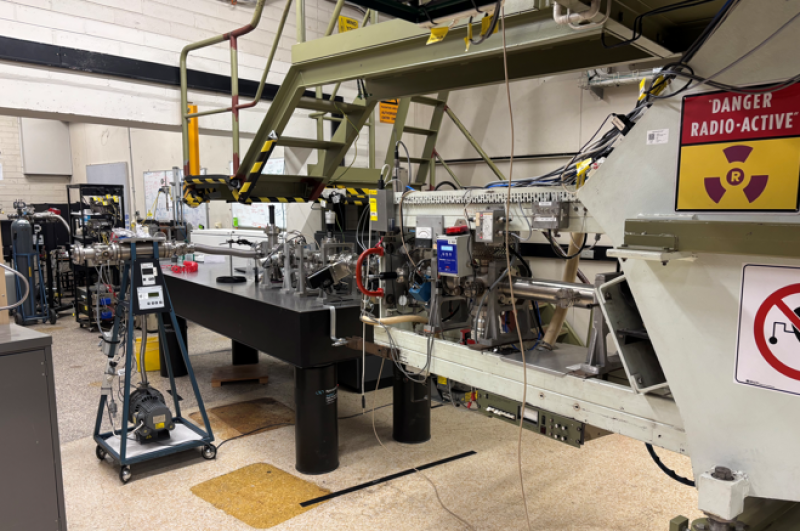
The goal of this project is to develop an end station for the Pelletron proton accelerator to offer irradiation capability for organoid & cell studies. It will include the design and modelling of an irradiation platform in the Pelletron Accelerator lab, beamline simulations, and experimental measurements. It will also include collaborative work with the Peter MacCallum Cancer Centre (PMCC), for dosimetry studies and machine measurements for comparative photon irradiation studies.
Project themes: accelerator physics, medical physics
Contact: Dr Jacinta Yap
jacinta.yap@unimelb.edu.au
Design of a Proton Driver for a Future Particle Collider
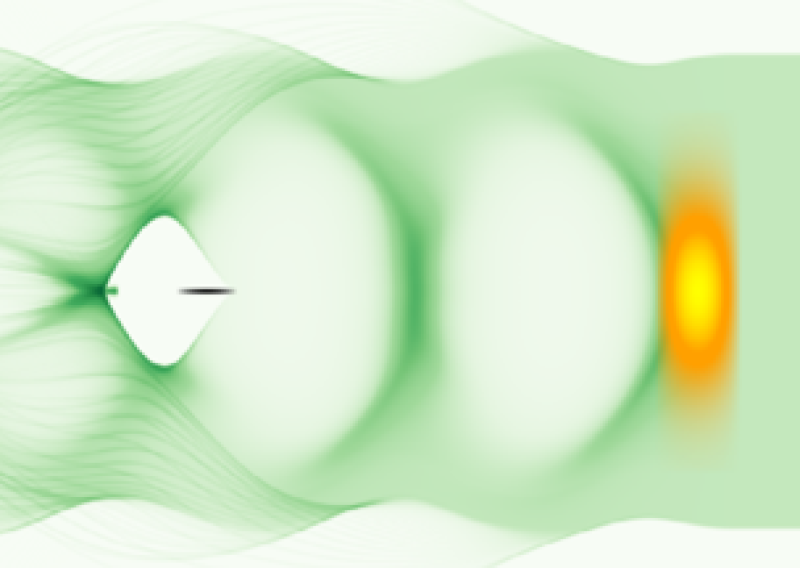
Future colliders must reach higher energies over shorter distances. Plasma wakefield accelerators achieve accelerating gradients 10-100x higher than conventional techniques. In these machines, a proton drive beam can be used to excite the necessary plasma waves. However, the drive beam must be high energy (>100GeV) and repetition rate (>1kHz) to make this scheme competitive, and delivering this drive beam is very challenging.
A Fixed Field Accelerator (FFA) can meet these design requirements, as FFAs have constant, complex magnetic fields, which allow for rapid acceleration. There have been first-order designs for Fixed Field Accelerators on this scale, but no detailed investigations.
The goal of this project is to perform a design study for an FFA-based proton driver for a plasma wakefield accelerator. This will involve simulations of beam acceleration and transport around the accelerator ring, and studies of the impacts of realistic errors on machine performance. This will be performed in collaboration with international partners from Europe and the US.
Project themes: accelerator physics, particle physics, complex systems
Contact: Dr Adam Steinberg
a.steinberg@unimelb.edu.au