The Smart Geothermal Industrial Loop (SGIL) project aims to provide independent industrial heat consumers with cost-effective, low-emission, and sustainable geothermal energy through a shared distribution network.
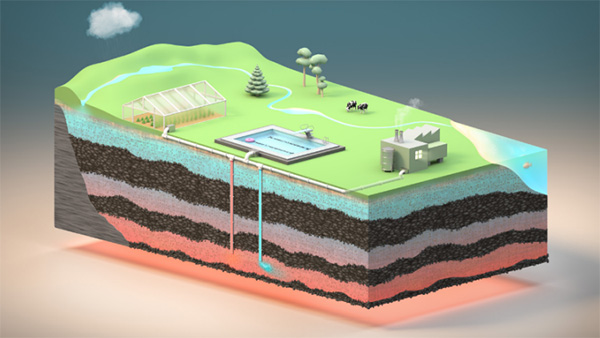
The project will draw natural hot water from an aquifer 600 metres beneath Morwell in the Latrobe Valley and deliver the heat to customers through a surface network of pipes and heat exchangers.
A preliminary economic assessment indicates that the cost of providing industrial heat from geothermal energy in this way will be a fraction of providing the same amount of heat by combustion of natural gas. The payback period for a nearby geothermal system is about five years. The primary objective of Phase 1 of the SGIL project is to design and cost an SGIL for the Gippsland Logistics Precinct (GLP), including determining the preferred locations, design, and cost of geothermal bores and surface infrastructure.
The project will model the geothermal aquifer at the location of the GLP, investigate potential heat market structures, quantify the heat that can be delivered to customers for space heating and industrial processes, engage with the local community and industries, and provide design specifications for the SGIL ready for the development of a full business case. In addition, the report will consider the regulatory, market, and social barriers that could hinder the construction or operation of the SGIL, with recommendations for mitigation. Successful demonstration of the SGIL will pave the way for similar projects throughout Gippsland.
Supported industries
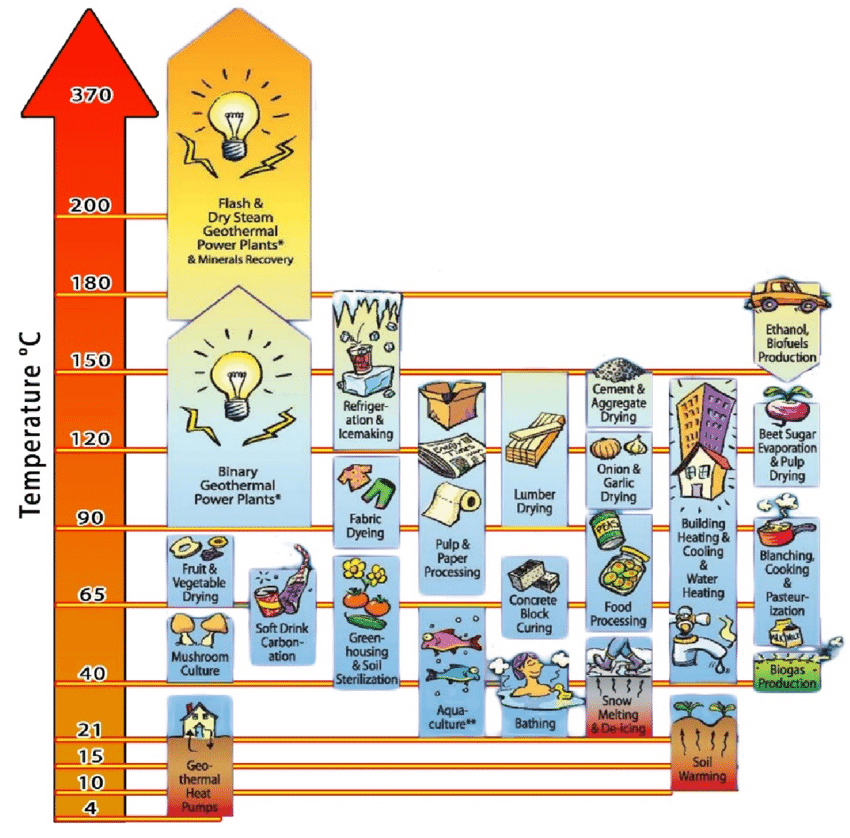
In the Latrobe Valley, industries requiring temperatures up to approximately 60°C can directly access the required heat. By incorporating a heat pump system, industries with a demand for temperatures up to around 120°C can also be accommodated. Since a substantial fraction of the costs is in the infrastructure, prices for heat remain stable over the long term. Moreover, this heat supply is accessible 24/7, ensuring uninterrupted availability.
Market opportunities
The SGIL represents a significant market opportunity for the Latrobe Valley and Gippsland to provide a variety of industrial heat consumers with cost-effective, low-emission, and sustainable geothermal energy in the form of direct heat (natural gas substitute). The SGIL will deliver heat to consumers at a stable price, removing the volatility and future uncertainty in the cost of natural gas supply that has plagued industries for the past decade. A successful pilot of the SGIL could be replicated at many sites throughout Gippsland as a foundation for continued economic growth. Furthermore, SGILs have the potential to attract new industries to the region, cementing Latrobe Valley's position as a global leader in geothermal energy technology and training.
Location
The Gippsland Basin underlies thousands of square kilometres of Victoria, Australia, with much of the basin containing the highly productive Lower Tertiary Aquifer (LTA). Thick layers of brown coal within the basin sequence act as a thermal blanket, elevating the temperature of significant portions of the LTA to as high as 75°C at less than 1,000m depth. Despite being identified as a potential geothermal energy source since 1962, the aquifer has not been fully explored due to the abundant and cheap natural gas and brown coal reserves. However, with the rising economic and environmental costs of these fossil fuels, the Gippsland Regional Aquatic Centre (GRAC) became the first new user of the geothermal aquifer in recent decades, opening in 2021.
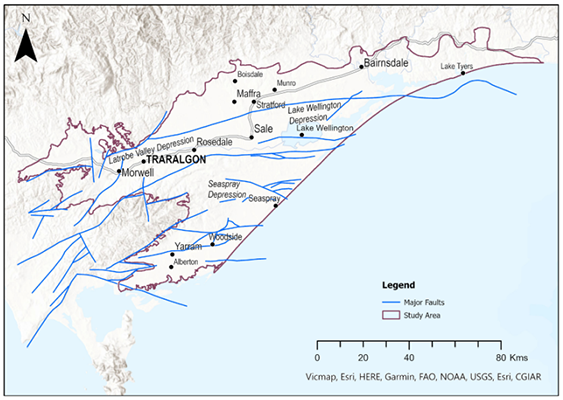
The GRAC has proven the potential of the aquifer as a source of cheap and reliable renewable heat, and the University of Melbourne, Regional Development Victoria, Latrobe Valley Authority and other partners are now working to identify other potential end users. Developing the Gippsland Basin geothermal resource could provide many socio-economic and environmental benefits, such as reating new industries, reducing pollution and greenhouse gas emissions, ensuring aquifer sustainability, and potentially in the future, enabling geothermal power generation from deeper reservoirs. Compared to geothermal aquifers worldwide, the natural hot water in the Gippsland Basin represents a world-class geothermal energy resource that has been largely overlooked until now. [1]
Technologies
- Geothermal energy is a thermal energy source within accessible parts of the Earth's crust. Half of the heat in the Earth's interior comes from primordial planetary accretion, and the rest is generated by the radioactive decay of naturally occurring isotopes. Geothermal energy resources are unevenly distributed, and their recoverability is closely related to geological conditions such as the thermal gradient and rock properties. Economic potential is generally highest where thermal gradients are highest, resulting in lower drilling costs to access and produce the heat. Groundwater is a crucial element in the direct use of geothermal energy, so hot sedimentary aquifers are a prime target for geothermal energy within sedimentary basins. Geothermal energy can be used directly as heat in a range of heat-intensive operations, such as water heating for swimming pools and aquaculture, space heating for buildings and horticulture, and process heating for food production and industry.
- Precision temperature logs collected from boreholes provide detailed and accurate temperature data for the subsurface. They enable the prediction of the temperature of the groundwater system at other locations to understand and predict which aquifers are hot and where. The prospectivity of a geothermal aquifer can be assessed by integrating these temperature measurements with hydrogeological information, such as depth, aquifer thickness, and hydraulic conductivity.
- The Victorian Aquifer Framework (VAF) provides consistent terminology for groundwater resource description and investigation, including parameters such as temperature, geothermal gradient, hydraulic conductivity, depth, and thickness.
[1] Fu, B., Beardsmore, G., and Webster, R.: Economic Performance Indicators for a Geothermal Aquatic Center in Victoria, Australia. MDPI Energies, (2023)
[2] O’Neill et al. (2022). Mapping the geothermal potential of Cenozoic aquifers in Gippsland, Victoria. Geological Survey of Victoria. p4, p7, p9