Hyper-K
Hyper-Kamiokande
Under a mountain in Japan, the Hyper-Kamiokande (Hyper-K) neutrino detector is currently under construction and will be the largest of its kind. The water Cherenkov detector will consist of a 71 m high, 68 m wide tank filled with 260,000 tons of ultra-pure water. Sprawled across the massive inner walls of the tank will be approximately 40,000 photo-sensors, 20,000 of which will be 50 cm photomultiplier tubes (PMTs).
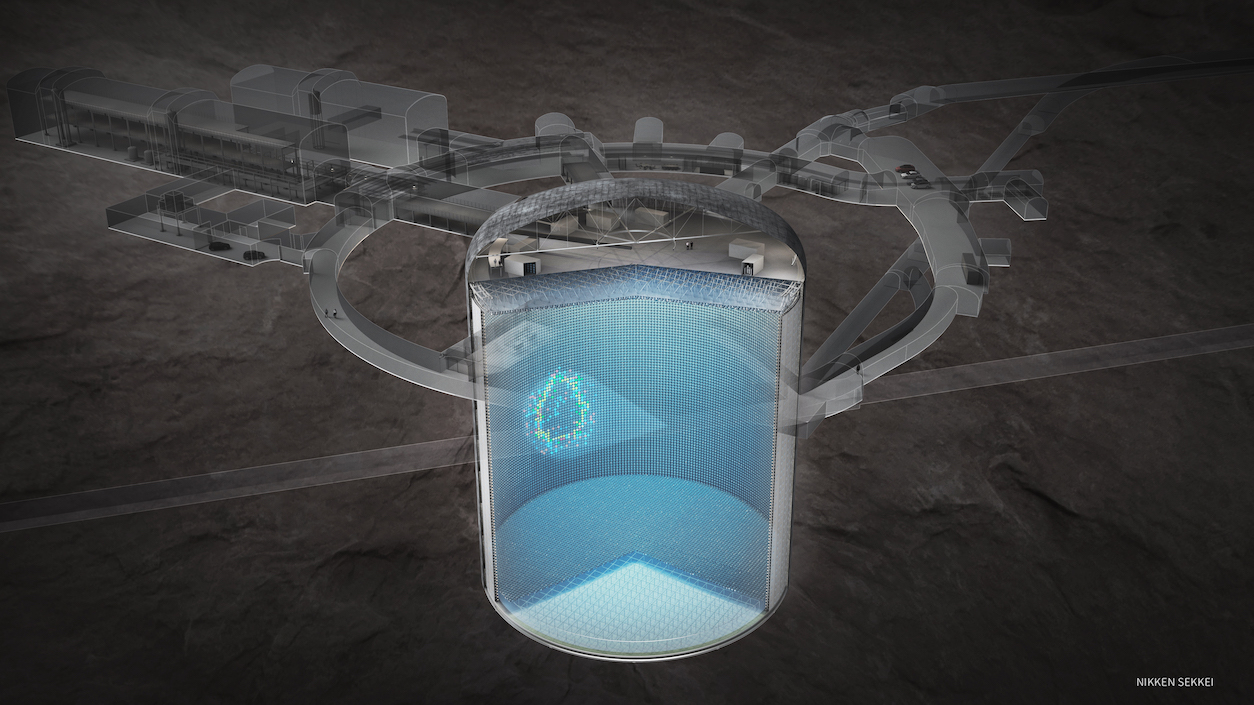
The Hyper-K experiment is poised to advance our understanding of neutrino physics by investigating the intricate nature of neutrino oscillations and other related phenomena. Neutrino oscillations, a quantum mechanical process wherein neutrinos change their flavour as they travel through space, provide critical insights into the fundamental properties of neutrinos, including their masses and mixing angles. By studying these oscillations with unprecedented precision, Hyper-K aims to address some of the most pressing questions in particle physics, such as the hierarchy of neutrino masses and the possible violation of charge-parity (CP) symmetry in the lepton sector.
Beyond oscillations, Hyper-K will explore a wide range of neutrino phenomena. This includes probing the potential connection between neutrinos and the matter-antimatter asymmetry observed in the universe, investigating solar and atmospheric neutrinos to better understand their origins, and detecting neutrinos from astrophysical sources, such as supernovae and gamma-ray bursts. The experiment will also search for rare processes, such as proton decay, which could provide evidence for grand unified theories.
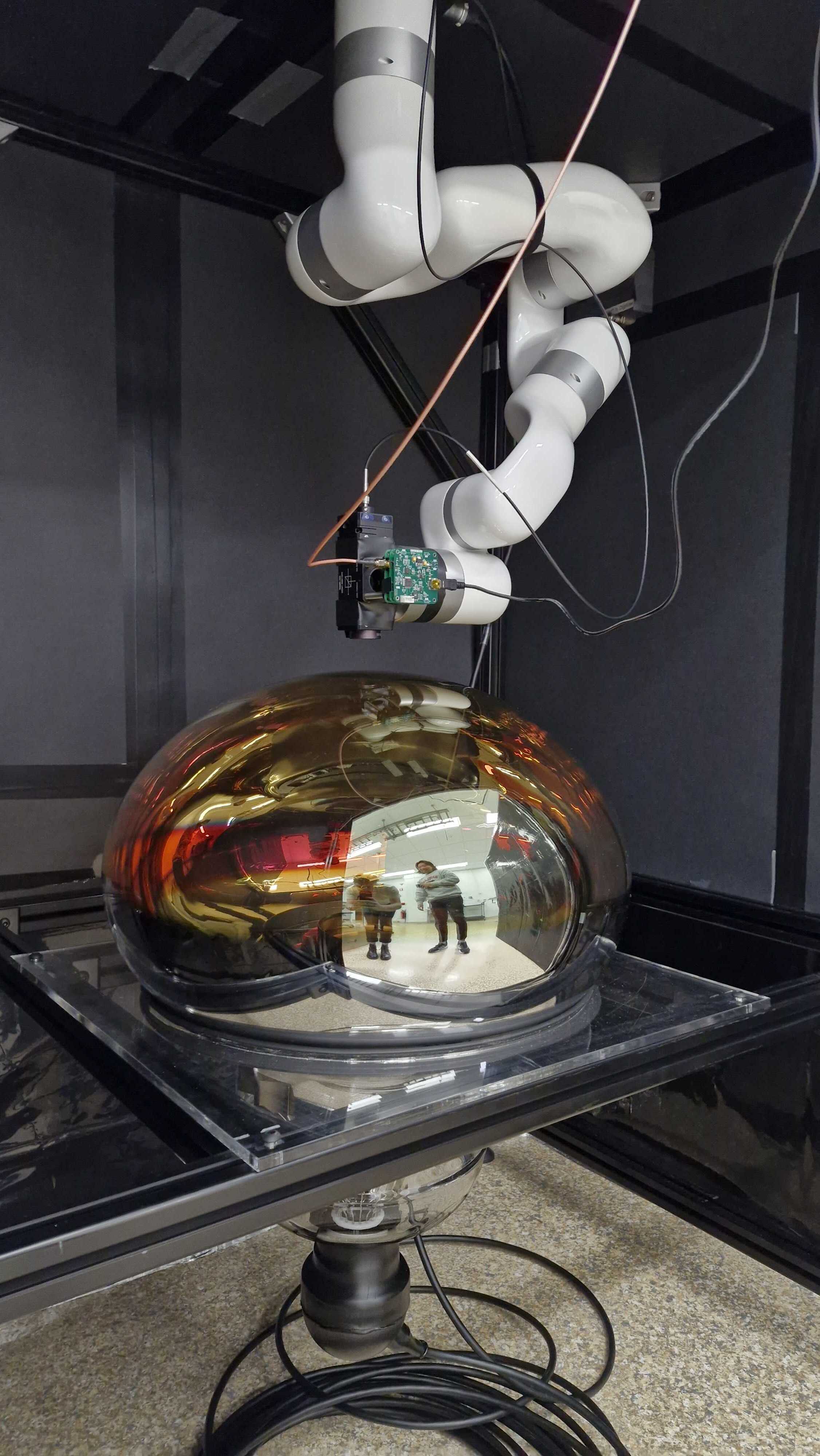
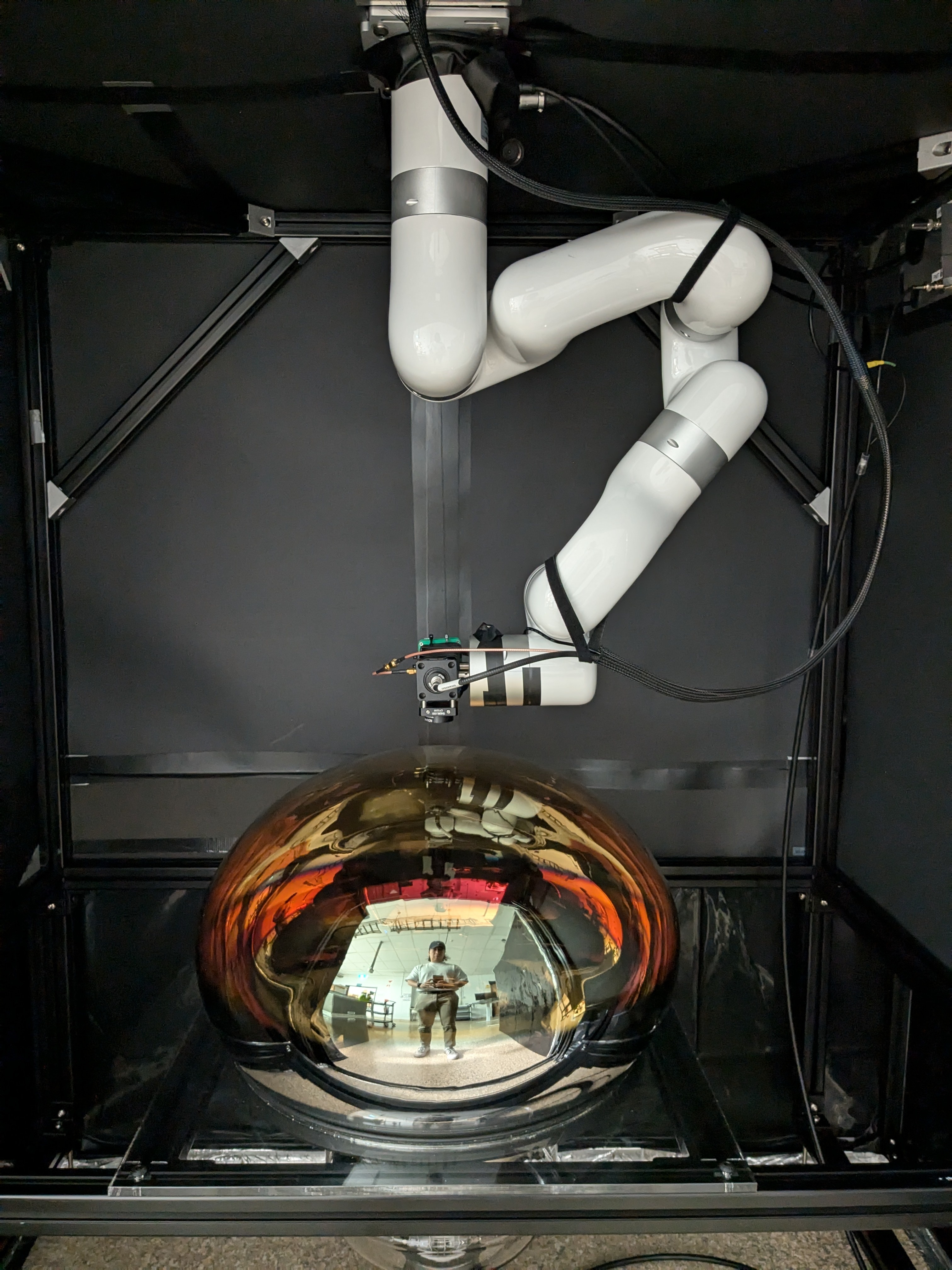
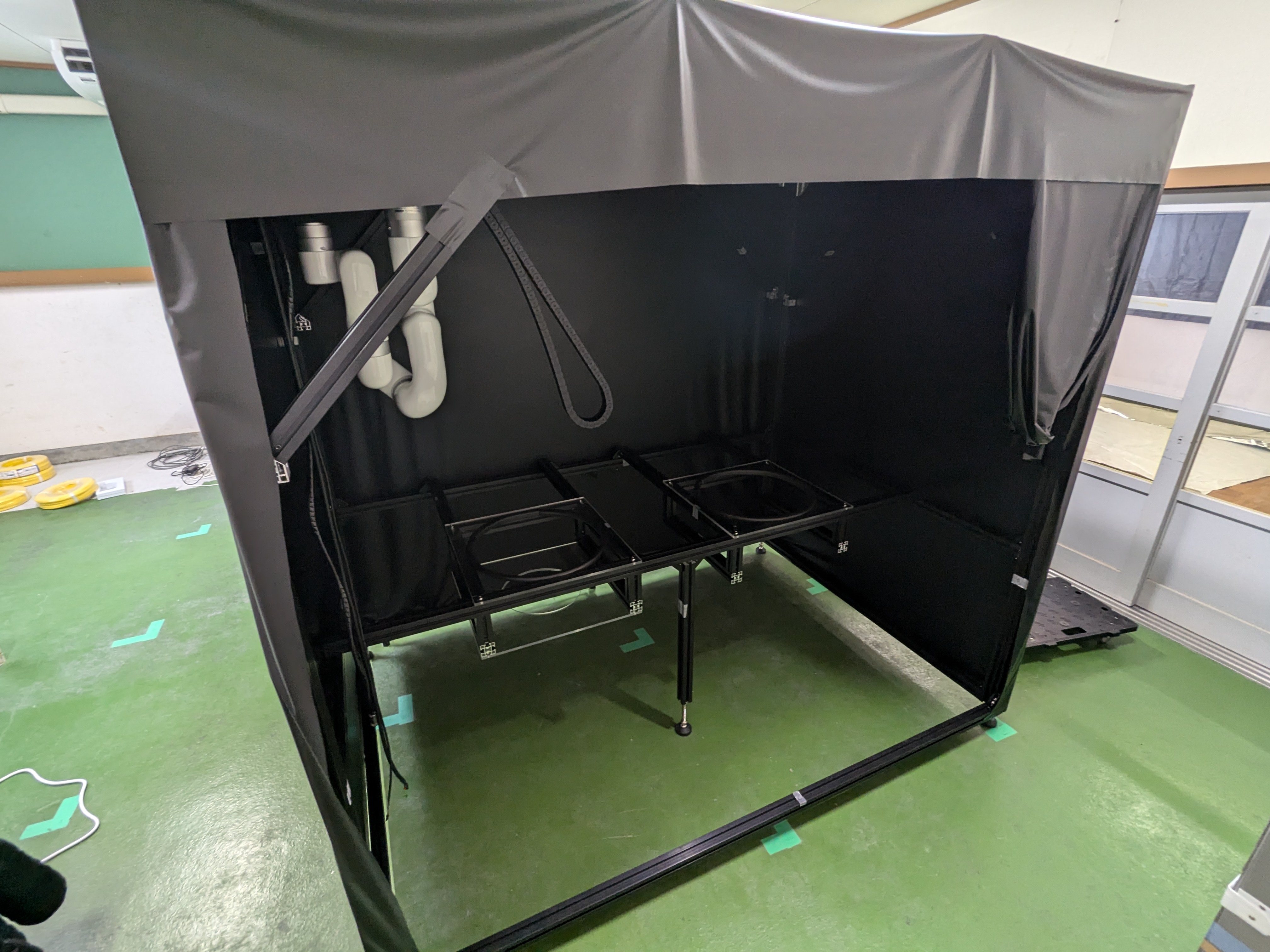
Photosensor calibration for the inner detector
A critical aspect of the experiment's operation is the precise understanding and calibration of the PMTs. Our Hyper-K team plays a vital role in developing and implementing the pre-calibration process for the 50 cm PMTs that will be integral to the detector's functionality.
Construction of the outer detector veto system
Our group is actively involved in the construction of the outer veto detector, which plays a crucial role in identifying and rejecting background signals to enhance the detector's sensitivity to neutrino interactions.

Neutrino reconstruction algorithms
Our group is developing a new generation of neutrino reconstruction algorithms with machine learning, which are essential for optimising the detector's performance, understanding its response to various event types, and ensuring accuracy in data analysis.