Public lectures in physics
The 2026 July Lectures in Physics
A series of free public lectures exploring physics: from the most fundamental questions to its influence in society.
Every Friday in July, since 1968, the July Lectures in Physics have been informing audiences and captivating the public’s imagination.
Browse the archive of past lectures
View timeline of all lecture titles
Physics at the Frontiers of Space and Astronomy
We are living in a new era of both astronomy and space exploration. The 2026 July Lectures in Physics is a thought-provoking free lecture series where world-leading physicists bring engaging talks to the Melbourne public every Friday in July since 1968. This year marks 100 years since the first flight of a liquid-fuelled rocket by Robert Goddard, 40 years since the launch of the first Mars rover (Soujourner) and is the year we witnessed humans returning to the moon with the inspirational Artemis II mission. Our eminent speakers will be asking the big questions: Should humans colonise Mars, and how would we? What can Australian-made satellites tell us about our Universe? What role do local scientists play in space exploration? How has the discovery of gravitational waves changed astronomy? Join our line-up of eminent speakers to find out.
- All lectures take place in-person and will be recorded for online viewing.
- Refreshments will be served after each lecture.
- Free public lectures, please book via Eventbrite.
For more information
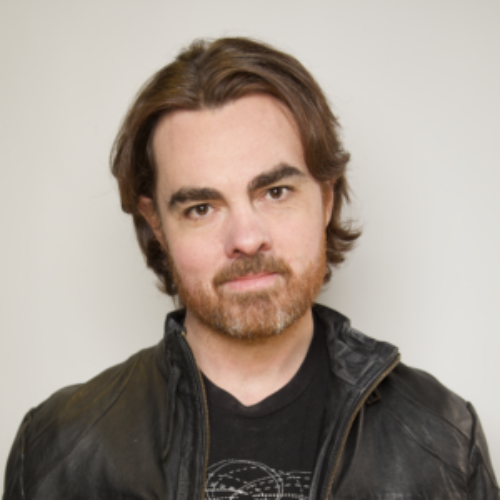
Monsters in the math: Black holes at the end of physics
Carrillo Gantner Theatre, Parkville, VIC
Friday 3 July, 6 pm - 8 pm
In this lecture, astrophysicist Dr Matt O’Dowd gave a fascinating exploration of one of the universe’s greatest mysteries: black holes.
Drawing on his expertise in astrophysics and his work as host of PBS Space Time, Matt unpacked the science behind these extraordinary cosmic objects -from how they form and warp space and time, to what they can reveal about the origins and future of our universe. Blending cutting-edge research with engaging storytelling, this talk offered a unique opportunity to delve into the strange and captivating world of black holes.
*Recordings for other lectures in this series are coming soon.
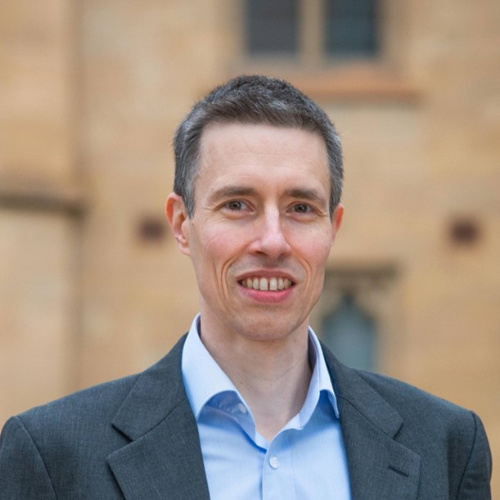
SpIRIT: How nanosatellites help us understand the Universe
Carrillo Gantner Theatre, Parkville, VIC
Friday 10 July, 6 pm - 8 pm
In this lecture, Prof. Trenti will introduce the SpIRIT nanosatellite: launched in orbit on 1st December 2023, it sent over 400 images back to Earth, recorded hundreds of hours of X-ray imaging data, and orbited the Earth over 16,000 times. As the first satellite supported by the Australian Space Agency, its operations aimed to detect gamma ray bursts out to the edge of the observable universe. Prof. Trenti leads the project, and shares in this lecture the many scientific, engineering, AI and autonomous achievements of the mission, along with what it means for Australia’s space heritage. SpIRIT far out-performed its initial mission, and in early 2026 the team announced “mission complete” for operations. The final stage of the mission will happen soon – with the 11kg satellite due to re-enter Earth’s atmosphere (where it will burn up) in around August 2026… keep an eye out!
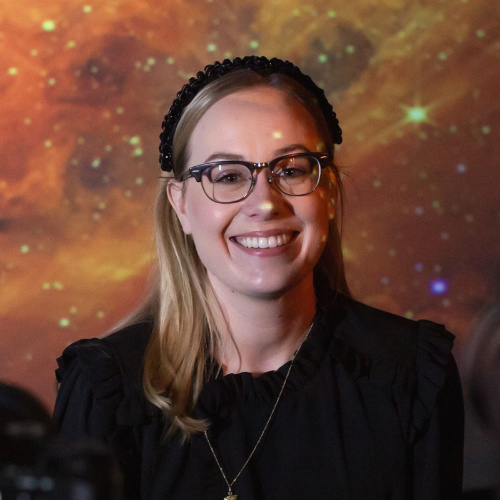
2041 Space Odyssey: The future of human space flight
Carrillo Gantner Theatre, Parkville, VIC
Friday 17 July, 6 pm - 8 pm
Dr Sara Webb is an Australian astrophysicist, science communicator and author, best known for her work on of astronomy.
This lecture takes us on a journey from today’s rapidly evolving space industry to the next era of human exploration beyond Earth. Blending cutting-edge science with real-world research in microgravity, including Dr Webb’s own, this talk explores how we will live, grow food, and sustain human life on the Moon, Mars, and deeper into the solar system. Through the lens of plant science, space agriculture, and the unique challenges of living off-world, we examine the discoveries waiting for us in low Earth orbit and beyond, from the search for new forms of life and planetary resources to the technologies that could transform humanity’s future in space. Expect a mix of futurism and cutting-edge research, as we imagine humanity as an interplanetary species.
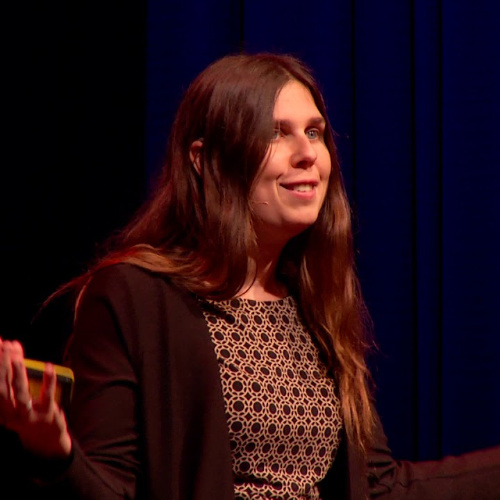
Painting the Universe: A visual and musical exploration of space-time
Carrillo Gantner Theatre, Parkville, VIC
Friday 24 July, 6 pm - 8 pm
Dr Karelle Siellez is an astrophysicist, internationally recognised for her contributions to multi-messenger astrophysics.
Gravitational waves were first detected in 2017, a moment that Dr Karelle Siellez describes poetically as a moment when “the Universe spoke in waves and light—ushering in a new era of astronomy”. In this lecture, Dr Siellez weaves together sound, art, and astrophysics to explore the story of gravitational waves and the collisions that create the elements we are made of. Through “multi-messenger” signals like kilonovae and gamma-ray bursts, we’ll uncover how the cosmos communicates its most violent events. Blending scientific insights with creative expression, this journey reveals how listening to the Universe—and protecting its silence—can connect science, nature, and humanity.
Want to know when the next July Lectures are announced?
Explore our huge archive of past lectures
Every Friday in July since 1968 the July Lectures in Physics have been informing and entertaining the public. Watch past lectures back to 1991 by selecting below.
-
2025 to present video archive
Watch past public Lectures in physics from 2025-present, including stories of Melbourne's particle accelerators, Quantum computing - From science fiction to powerful technology, Quantum biotechnology and quantum sensing and more.
-
2020 to 2024 video archive
Watch past public Lectures in physics from 2020-2024 including on Dark matter, quantum foundations of the universe, Indigenous astronomy, ion beams for cancer therapy, piecing together the life and deaths of stars, revolutionary discoveries in physics made too soon and more.
-
2015 to 2019 video archive
Watch past public Lectures in physics from 2015-2019 covering the physics of the Apollo moon mission in 1969, the rise of cosmology and particle physics, methods for reaching extremely high speeds, bending light waves for new technology and more.
-
2010 to 2014 video archive
Watch past public Lectures in physics from 2010-2014. Topics include the Australian Synchrotron and you, understanding the cosmos, absolutely no resistance, the solid-state laser scanning continents and computer chips, the invention of the laser from Einstein to holograms and more.
-
2009 and earlier video archive
Watch past public Lectures in physics from 2009 and earlier years. Including topics like the Giant Magellan Telescope 400 + 10 years after Galileo, first pictures of dark matter, 19th-century world wide web, just how much matter is there in the universe, physics of the didjeridu and more.
History of Public lectures in Physics all the way back to 1968.
Browse the timeline of every lecture and presenter.